Sourdough Bread Recipe
Sourdough with 70% hydration
Ingredients
1000 grams bread flour
300 grams starter
650 grams tepid water
After the rest:25 grams of salt
50 grams tepid water
Instructions
Using a gram scale, measure out your yeast and water and combine. Then, with your hand you want to mix the water and the yeast. Most of the good yeast actually comes from the baker's hands so I find this step essential.
Side note: A study was conducted in Sweeden to figure out where yeast came from, and all the bread that was tested had the same yeast that was on the baker's hands and only about a quarter of it came from the yeast in the air where the bakers work. So try to use your hands when you make your bread and when you feed your starter as much as you can.
Add in your bread flour after you’ve mixed the water and flour. With one hand mix your batch just until you don't see any more dry spots of flour. Cover your dough with seran for 20 minutes. This is the most important step when making sourdough. This is the Fermentolyse. When the flour, water, and yeast amalgamate and become a sum greater than their parts, dough.
The Rest
After the dough has rested, mix in the salt and remaining water while keeping your dough in the bowl. You want to knead the salt in the dough just enough until you don’t feel the grains of salt running between your fingers.
Cover your dough with saran wrap and let it rest for 20 minutes. Once time is up you want to pull your dough. With your hand start from the bottom of the dough and pull it in a vertical motion and work your way around to the other side. You will notice that it will get tighter within 3 pulls. At this point cover your dough with seran and repeat 3 times over the course of an hour and a half, pulling every 30 minutes. Each time you pull you should see more and more bubbles forming within the dough, this is good, you are trapping gas and creating the holes which will eventually be the holes in your delicious sourdough. The more bubbles— the better the batch.
Bulk Fermentation
Once you are done pulling your dough, you want to complete the bulk fermentation. Let it rest for 2-3 hours for its rise. It should double in size but don’t worry if it doesn’t rise too much. If it has bubbles you are solid. You can also option to let it rise in the fridge overnight but if you do you need to bake within 2 hours of it coming out of the fridge in the morning to prevent over-proofing. Similarly, if you let the bulk ferment go 4-5 hours outside (not in the fridge) your dough will over-prove and will not rise in the oven. I’ve done this, it sucks but it’s a good lesson to learn because once you see what over-proofed bread looks like, you never forget it and you know what to look for when you or someone else has made this mistake. When I bake I typically start my bread in the evening, pull it for a couple of hours and then bulk ferment in the fridge overnight...that’s just what works for me.
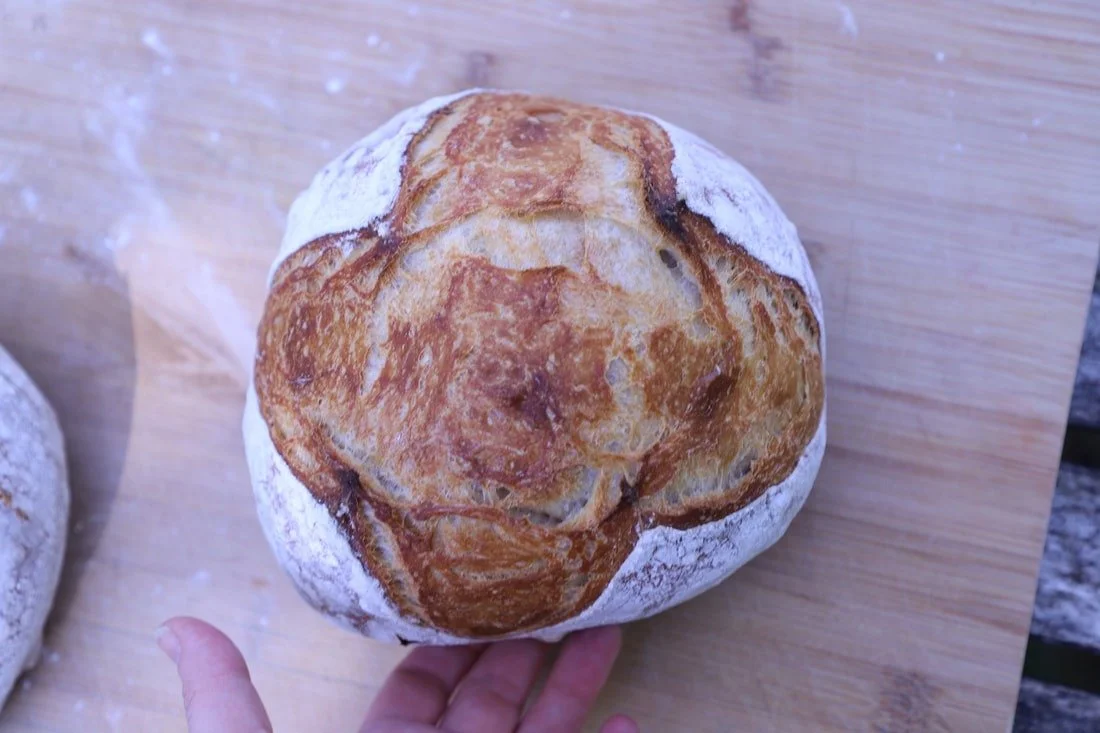
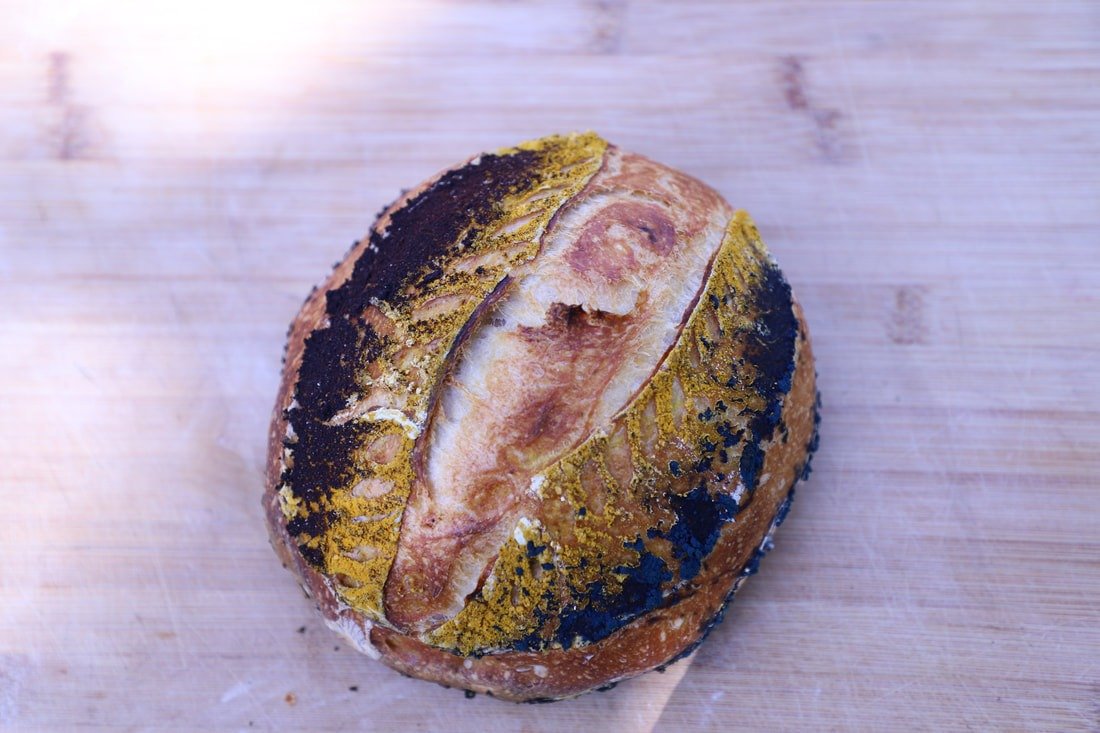
Whichever route you have taken you are now ready for your bench rest. Sprinkle a generous amount of rice flour on your butcher block. The dough will be pretty wet and it will stick and absorb the moisture of other flours, hence changing the texture and hydration of your dough which you want to avoid. But if you can’t get rice flour you will still have delicious sourdough. Pull your bulk fermented dough out of that bowl and let it rest on your cutting board for 30 minutes. Shape your dough into mounds pulling and tucking the dough under itself to achieve a round ball shape. Dust with rice flour and using a lame, score a design into your bread. Scoring is fun but it also helps your dough expand in the oven.
Bake
Preheat your oven to 450.
Take a cast iron dutch oven and place it in the oven to get hot. Once your oven is up to temp pull your dutch oven out. Transfer your scored mounds into the hot dutch ovens. Quickly put the lid on the dutch and return them to the oven. Set your timer for 20-25 minutes and then remove the lid from the dutch, be careful, you will release a lot of steam and it’s very hot. Return your dutch to the oven and reduce the heat to 425. Bake until gold and crispy, about 20-30 more minutes. If you want the loaf extra crispy, keep the oven at 450 degrees.
Remove and repeat with remaining loaf.
To preserve the remaining loaf wrap tightly in seran wrap after it cools and place in the freezer.
ENJOY!